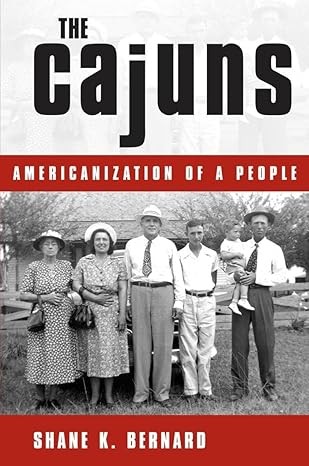
The Cajuns
Americanization of a people
The past sixty years have shaped and reshaped the group of French-speaking Louisiana people known as the Cajuns. During this period, they
have become much like other Americans and yet have remained strikingly distinct. The Cajuns: Americanization of a People explores
these six decades and analyzes the forces that had an impact on Louisiana's Acadiana.
In the 1940s, when America entered World War II, so too did the isolated Cajuns. Cajun soldiers fought alongside troops from Brooklyn and
Berkeley and absorbed aspects of new cultures. In the 1950s as rock 'n' roll and television crackled across Louisiana airwaves, Cajun music
makers responded with their own distinct versions. In the 1960s, empowerment and liberation movements turned the South upside down. During
the 1980s, as things Cajun became an absorbing national fad, “Cajun” became a kind of brand identity used for selling everything from swamp
tours to boxed rice dinners. At the dawn of the twenty-first century, the advent of a new information age launched “Cyber-Cajuns” onto a
worldwide web. All these forces have pushed and pulled at the fabric of Cajun life but have not destroyed it.
A Cajun himself, the author of this book has an intense personal fascination in his people.
By linking seemingly local events in the Cajuns' once isolated south Louisiana homeland to national and even global events, Bernard
demonstrates that by the middle of the twentieth century the Cajuns for the first time in their ethnic story were engulfed in the currents
of mainstream American life and yet continued to make outstandingly distinct contributions.
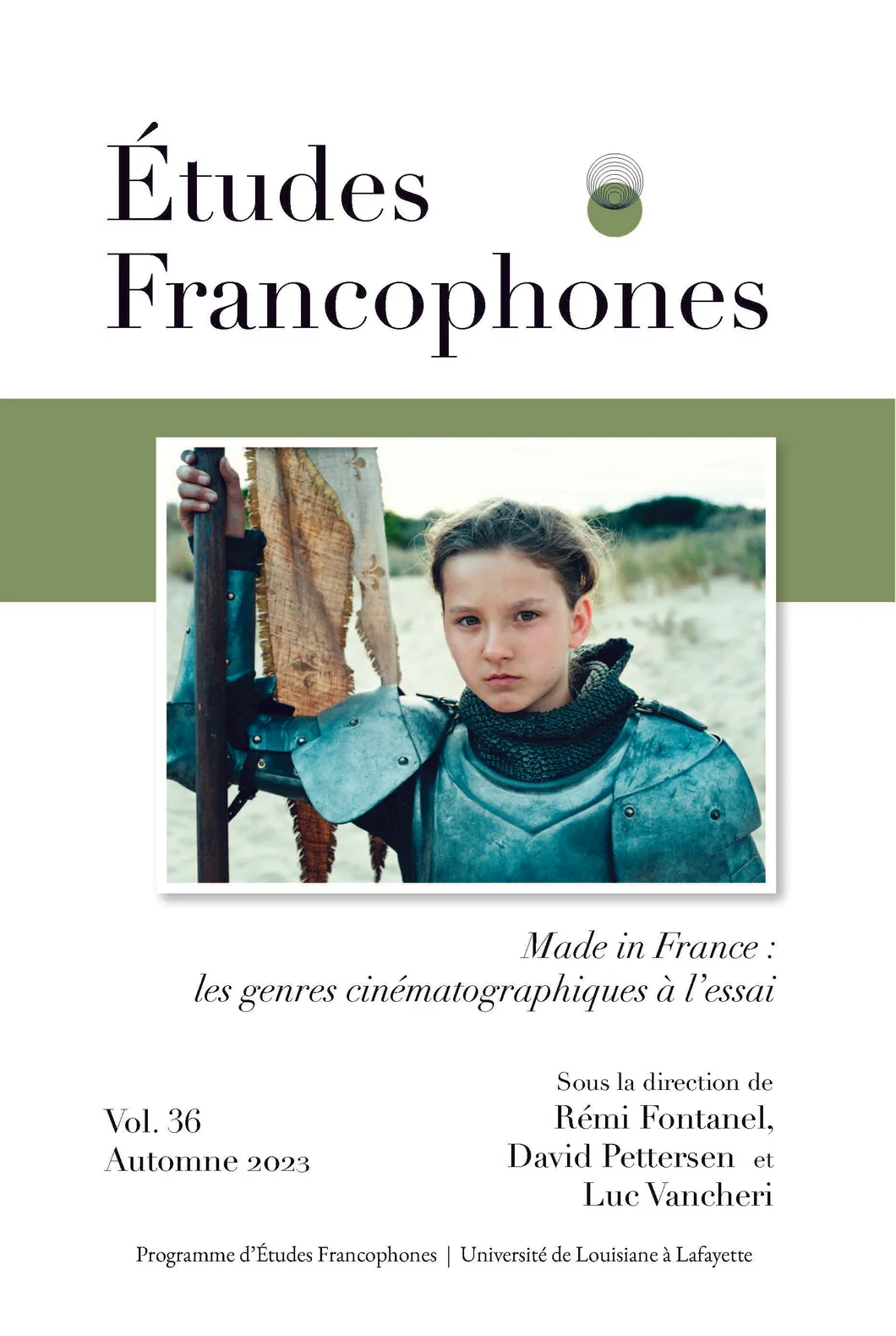
Études Francophones
Si le développement et la visibilité d’un genre doivent nécessairement beaucoup à l’industrie, l’inverse est également vrai. Ce numéro d’Études Francophones a choisi d’aborder la diversité des enjeux de natures historique, économique, culturelle et politique qui nourrissent les relations qui se tissent entre des auteurs de films, une économie cinématographique mondialisée et un public désormais confronté à l’avènement des plateformes de streaming et des nouveaux modes de production. Malgré la relation contrariée que le cinéma français a entretenue avec le genre, celui-ci demeure l’argument principal des ventes à l’étranger. Made in France n’est plus seulement le label d’une relocalisation industrielle, mais bel et bien la nouvelle devise du cinéma français à l’étranger.
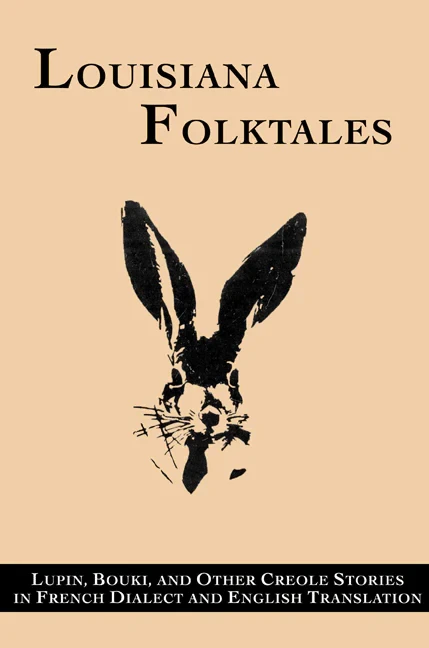
Louisiana Folktales
This collection constitutes the first complete anthology of the folktales collected by linguist/historian Alceé Fortier, including complete facsimiles of the original 1895 edition of Louisiana Folktales, as well as facsimiles of the stories published in the Publications of the Modern Language Association of America and the Journal of American Folklore. Each selection is rendered in Creole French and English translation and includes Fortier's original notes.
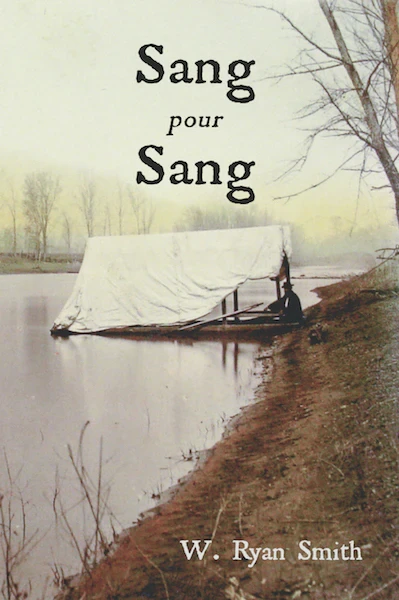
Sang pour sang
In the Spring of 1864, Adam Pierce is a Louisiana creole of color passing for white. His home, Natchitoches Parish and the Red River Valley, is being destroyed as the closing days of the Civil War bring destruction. Pierce, a depressed castoff of campaigns long past, enlists once again. The war gives Adam a sense of purpose, but what he isn’t prepared for are the revelations that await him.
A reclusive widower, Adam learns through a deathbed confession what really happened to his lost family. Now, with the chaos of the war to mask his true intentions, he sets out on a one-way journey of revenge and redemption.
Sang Pour Sangexplores the frailties of the human condition as the depths of passion are navigated, suffering is redeemed, and mindless savagery envelopes those who were once ordinary people.
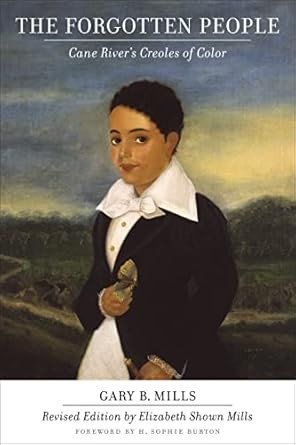
The Forgotten People
Cane River's Creoles of Color
Out of colonial Natchitoches, in northwestern Louisiana, emerged a sophisticated and affluent community founded by a family of freed slaves.
Their plantations eventually encompassed 18,000 fertile acres, which they tilled alongside hundreds of their own bondsmen. Furnishings of
quality and taste graced their homes, and private tutors educated their children. Cultured, deeply religious, and highly capable, Cane
River's Creoles of color enjoyed economic privileges but led politically constricted lives. Like their white neighbors, they publicly
supported the Confederacy and suffered the same depredations of war and political and social uncertainties of Reconstruction. Unlike white
Creoles, however, they did not recover amid cycles of Redeemer and Jim Crow politics.
First published in 1977, The Forgotten People offers a socioeconomic history of this widely publicized but also highly romanticized
community -- a minority group that fit no stereotypes, refused all outside labels, and still struggles to explain its identity in a world
mystified by Creolism.
Now revised and significantly expanded, this time-honored work revisits Cane River's "forgotten people" and incorporates new findings and
insight gleaned across thirty-five years of further research. This new edition provides a nuanced portrayal of the lives of Creole slaves
and the roles allowed to freed people of color, tackling issues of race, gender, and slave holding by former slaves. The Forgotten People
corrects misassumptions about the origin of key properties in the Cane River National Heritage Area and demonstrates how historians
reconstruct the lives of the enslaved, the impoverished, and the disenfranchised.
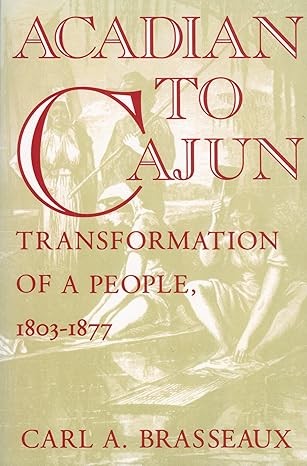
Acadian to Cajun
Transformation of a people, 1803-1877
This book is the first to examine comprehensively the demographic growth, cultural evolution, and political involvement of Louisiana's large
Acadian community between the time of the Louisiana Purchase (1803), when the transplanted culture began to take on a decidedly Louisiana
character, and 1877, the end of Reconstruction in Louisiana, when traditional distinctions between Acadians and neighboring groups had
ceased to be valid.
Serving as a model for ethnohistories of other nonliterate peoples, Acadian to Cajun reveals how authentic cultural history can be
derived from alternative historical resources when primary materials such as newspapers, correspondence, and diaries are not available.
Here, Carl A. Brasseaux assembles a composite picture of this large Cajun community. From civil records, federal census reports,
ecclesiastical registers, legislative acts, and electoral returns, he reveals the astonishing cultural transformation of the Acadians of
Nova Scotia into the Cajuns of Louisiana.
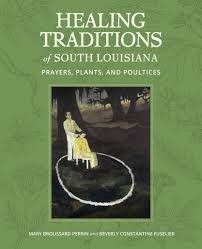
Traiteurs in Francophone Louisiana
“Je jongle au bon Dieu quand je traite” highlights a local understanding of traitement, or treatment as it is called in
English, a healing tradition specific to Francophone Louisiana. After the Acadian resettlement in Louisiana—a Spanish colony at the time—the
Cajuns developed a unique, blended culture in response to both a physical environment (which included swamps, bayous, marshes, and prairies)
and a social environment that mixed continental and Caribbean French peoples, Germans, Spaniards, Indigenous peoples, and African and
Anglo-Americans. Sharing the need for medical attention, the practice of traitement—and the importance of traiteurs—was born.
In this work, presented in English on one side and French on the other, Dana David Gravot explores the practice of traitement through her
decades-long experience interviewing the traiteurs themselves. In particular, she explains the complex and often unspoken social rules that
underpin the tradition, and notes a few of the common herbal remedies that often accompany a traitement. By combining years of academic
study with highly personal and intimate interviews, Gravot underscores the significance of this local healing practice.
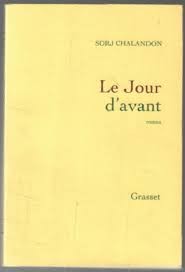
Le jour d'avant
« Venge-nous de la mine », avait écrit mon père. Ses derniers mots. Et je le lui ai promis, poings levés au ciel après sa disparition brutale. J'allais venger mon frère, mort en ouvrier. Venger mon père, parti en paysan. Venger ma mère, esseulée à jamais. J'allais punir les Houillères, et tous ces salauds qui n'avaient jamais payé pour leurs crimes.
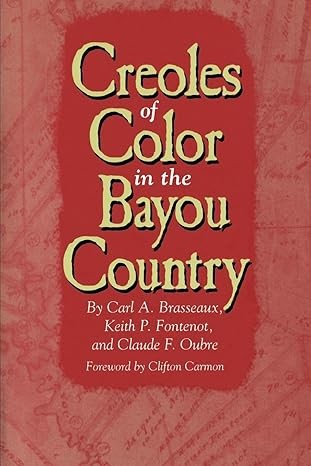
Creoles of color in the Bayou country
Creoles of Color are rightfully among the first families of southwestern Louisiana. Yet in both antebellum and postbellum periods they
remained a people considered apart from the rest of the population. Historians, demographers, sociologists, and anthropologists have given
them only scant attention.
This probing book, focused on the mid-eighteenth to the early twentieth centuries, is the first to scrutinize this multiracial group through
a close study of primary resource materials.
During the antebellum period they were excluded from the state's three-tiered society―white, free people of color, and slaves. Yet Creoles
of Color were a dynamic component in the region's economy, for they were self-compelled in efforts to become an integral part of the
community. Though not accepted by white society, they were unwilling to be classified as black. Imitating their white neighbors, many were
Catholic, spoke the French language, and owned slaves. After the Civil War, some Creoles of Color, being light-skinned, passed for white.
Others relocated to safe agricultural enclaves, becoming even more clannish and isolated from general society.
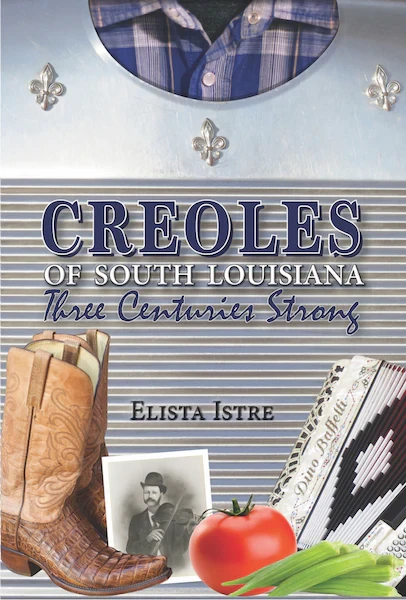
Creoles of South Louisiana
Three Centuries Strong
Creoles established themselves in South Louisiana long before Acadian exiles reached the shores of the Bayou State. Boasting a mélange of African, European, and North American roots, Creoles converged on Louisiana’s prairies and created their own distinct cuisine, language, and musical style.
In Creoles of South Louisiana: Three Centuries Strong, Dr. Elista Istre invites her readers to enter the Creole world—a place where cooks tempt taste buds with gumbo and crawfish, storytellers mesmerize young and old with tales tied to three continents, and musicians and dancers pulsate to the rhythms of accordions and rubboards.
Despite inside pressure to isolate and outside pressure to assimilate, Creoles from all walks of life continue to forge new identities while preserving and celebrating traditional elements of their rich heritage. They are adaptable. They are resilient. They are strong.
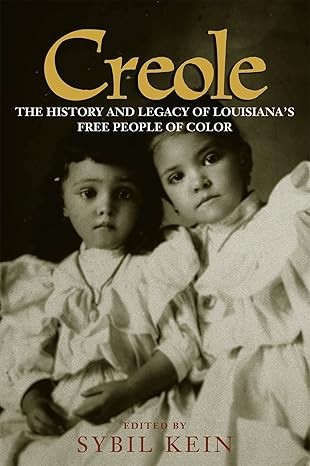
Creole
The history and legacy of Louisiana's free people of color
Who are the Creoles? The answer is not clear-cut. Of European, African, or Caribbean mixed descent, they are a people of color and Francophone dialect native to south Louisiana; and though their history dates from the late 1600s, they have been sorely neglected in the literature. Creole is a project that both defines and celebrates this ethnic identity. In fifteen essays, writers intimately involved with their subject explore the vibrant yet understudied culture of the Creole people across time―their language, literature, religion, art, food, music, folklore, professions, customs, and social barriers.
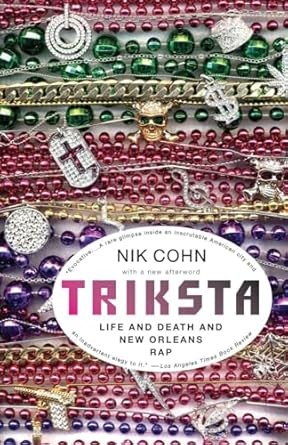
Triksta
Life and death and New Orleans rap
Acclaimed music writer Nik Cohn’s love of hip-hop goes back to its beginnings, and his love of New Orleans even further, to when he passed through the Big Easy on tour with The Who and discovered a place with a magic that never failed to seize him. On the surface he’s the least likely candidate for a rap impresario. But with his signature charm and passion, he plunges headfirst into the wards, clubs, and projects of New Orleans, opening up a world closed to most outsiders: a journey into the heart of the hip-hop dream, and into larger question of racial identity in America. Written before Hurricane Katrina struck (and published here with an afterword that chronicles how Katrina altered the lives of those he met) Triksta now stands as an elegy to a city, its music, and its people.
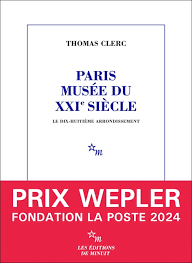
Besançon, ville de lumières et de couleurs
Description not available
Guide Michelin La Nouvelle-Orleans
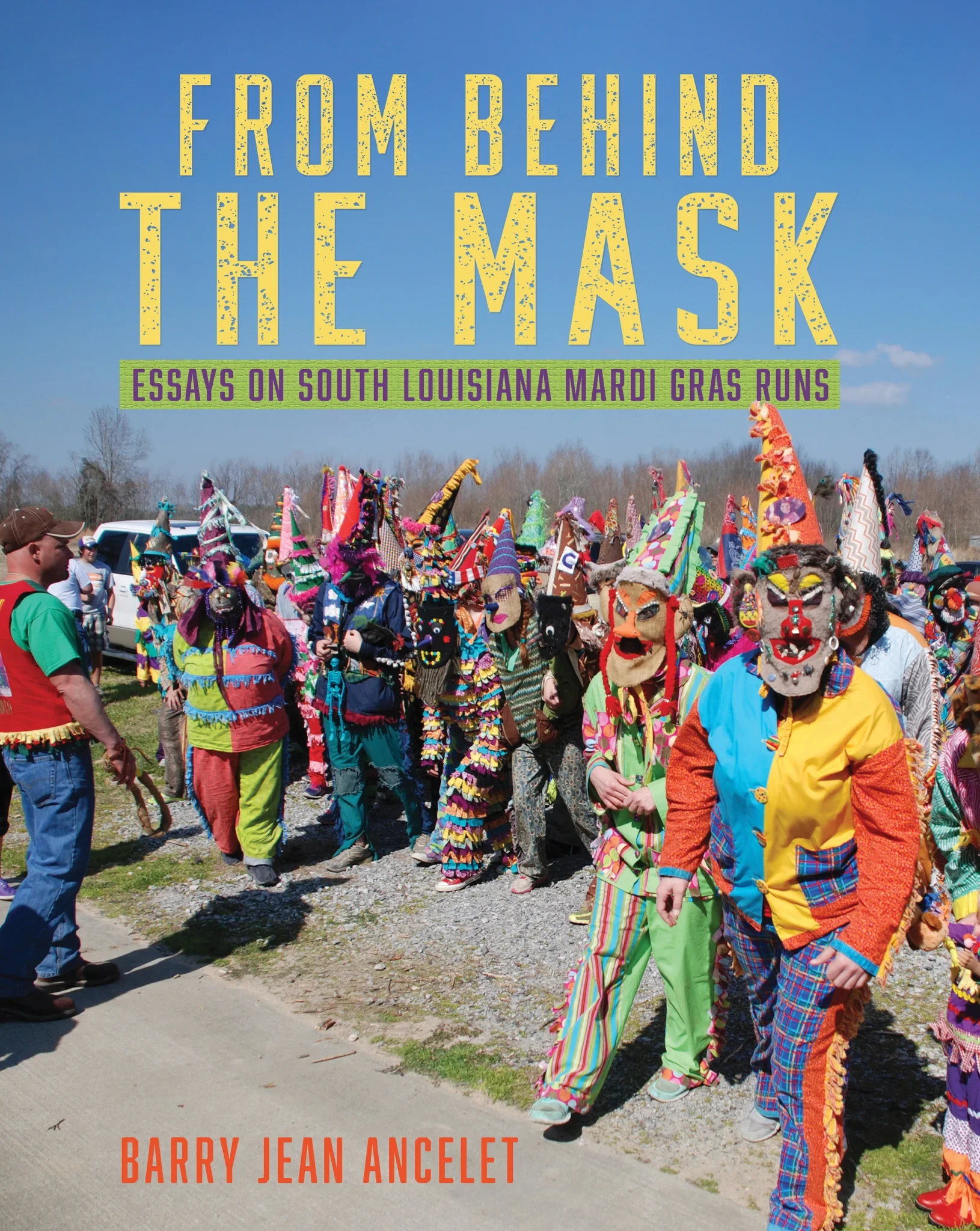
From behind the mask
Essays of South Louisiana Mardi Gras runs
From Behind the Mask brings together essays written over a period of more than forty years, based on Barry Jean Ancelet’s observations and experiences. Ancelet explores critical elements of the traditional Mardi Gras runs of Cajun and Creole South Louisiana, including strategies for masking, costuming, begging, singing, playing, and moving through the countryside. He addresses historical issues, including the tradition’s roots in European and Afro-Caribbean festivals, as well as its contemporary dynamics and ongoing evolution, including local social, cultural and political issues involving class, identity, gender and race.
Mardi Gras runs can seem at first glance to be wide-open public celebrations, but they are actually intimate expressions of community solidarity. Carnivalesque play is most effective when the players and their hosts would know each other except for the masks and costumes of the moment. Singing, dancing, intense begging, and verbal play create the improvised theater provided in exchange for contributions to the communal gathering and meal at the end of the day. Mardi Gras is an elaborate game designed to entertain and generate laughter, and because every game has its rules and masters, Mardi Gras capitaines and their deputies ride herd on the revelers to keep play from devolving into chaos. The processional nature of this ritual enables it to move through what the participants think of as their little worlds, turning everything around them into temporary props and stages and drawing observers into their improvised farces, driven by a sense of deep play that tickles power with inversions of social structures and intense interaction from behind the masks.
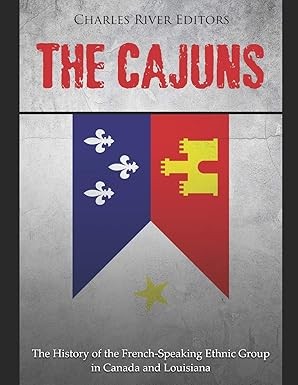
The Cajuns
Deep within the bayous and swamps of Louisiana resides a population descended from an exodus. These people, called Cajuns or Acadians, were
expelled from their homelands. Persecuted and homeless, they traveled hundreds of miles south in search of a new home and ultimately settled
in the Pelican State, where they made new lives for themselves free from their British conquerors. Though not always warmly welcomed, they
were accepted, allowing them to practice their different culture amidst their new neighbors.
Though their home has changed flags over the centuries, the people themselves have remained, retaining a culture that goes back several
centuries. While people continue to assimilate, some have continued to live same lifestyles their ancestors did for generations, and they
continue to fascinate outsiders, so much so that they occasionally end up being featured on the History Channel.
The Cajuns: The History of the French-Speaking Ethnic Group in Canada and Louisiana profiles the people, from their origins to their history
across North America. Along with pictures of important people, places, and events, you will learn about the Cajuns like never before.
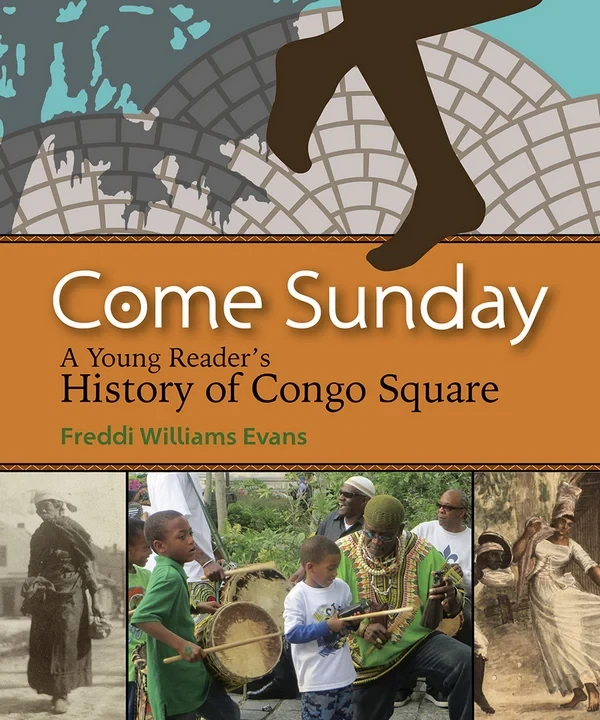
Come Sunday
A young reader's history of Congo Square
Come Sunday is an image-driven book for middle grade students that provides culturally relevant content and parallel histories of Congo Square and New Orleans; historical background on present-day cultural practices; and over one hundred images and primary documents that promote critical thinking.
Like windows into the past, these primary documents and images allow readers to get as close as possible to what life was like during the time of the gatherings in Congo Square. The photographs, newspaper ads, city ordinances, eye-witness reports, rhythmic patterns, and song lyrics enable readers to analyze, compare, and think critically about the information presented. This process develops a deeper understanding of the people and events that shaped the history of New Orleans’s Congo Square. This book supports standards and benchmarks in social studies and language arts, and it invites discussions, cross curriculum instruction, and extended learning opportunities.
Freddi Williams Evans is an independent scholar and the author of Congo Square: African Roots in New Orleans, the first comprehensive study of the historic landmark and the recipient of the Louisiana Endowment for the Humanities’ 2012 Book of the Year Award. Her research and advocacy influenced the 2011 New Orleans City Council ordinance that made the name “Congo Square” the official name of the location.
Bayou Song
Creative explorations of the Louisiana landscape
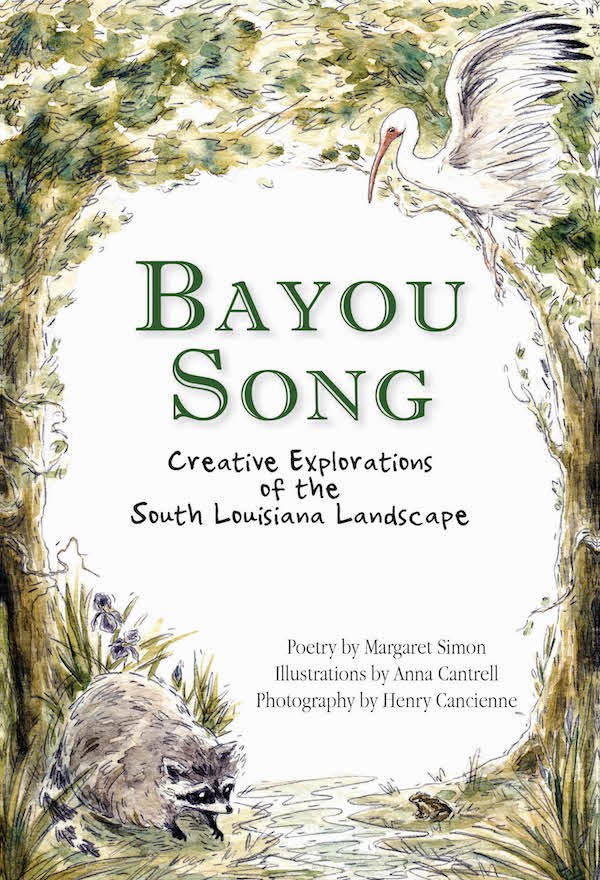
Selected to represent the state of Louisiana in the “52 Great Reads” children’s book program at the 2018 National Book Festival in Washington, D.C., Bayou Song: Creative Explorations of the South Louisiana Landscape is a poetic journey along Louisiana’s Bayou Teche. Through poetry and art, explore the plants and animals that live along and in the bayou. Teachers will find ideas and prompts for teaching students about the habitat of Louisiana wetlands through poetry and creative writing. Invitations to write and draw make this book an interactive journal for those of all ages who wish to admire and be inspired by South Louisiana’s landscape.
From the Kingdom of Kongo to Congo Square
Kongo dances and the origins of the Mardi Cras Indians
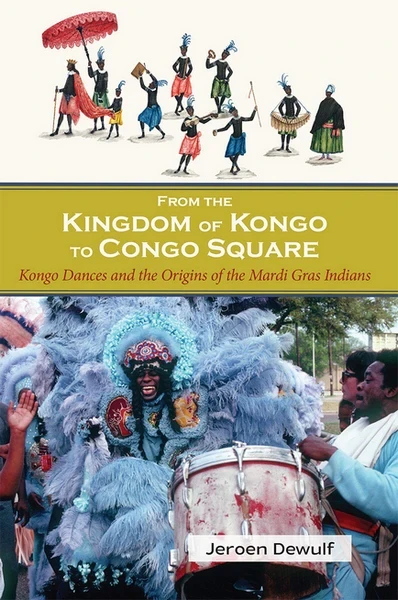
From the Kingdom of Kongo to Congo Square: Kongo Dances and the Origins of the Mardi Gras Indians presents a provocatively new
interpretation of one of New Orleans’s most enigmatic traditions—the Mardi Gras Indians. By interpreting the tradition in an Atlantic
context, Dewulf traces the “black Indians” back to the ancient Kingdom of Kongo and its war dance known as sangamento.
Enslaved Kongolese brought the rhythm, dancing moves, and feathered headwear of sangamentos to the Americas in performances that came to be
known as “Kongo dances.”
By comparing Kongo dances on the African island of São Tomé with those in Latin America, the Caribbean, and Louisiana, Dewulf demonstrates
that the dances in New Orleans’s Congo Square were part of a much broader Kongolese performance tradition. He links that to Afro-Catholic
mutual-aid societies that honored their elected community leaders or “kings” with Kongo dances. While the public rituals of these
brotherhoods originally thrived in the context of Catholic procession culture around Epiphany and Corpus Christi, they transitioned to
carnival as a result of growing orthodoxy within the Church.
Dewulf’s groundbreaking research suggests a much greater impact of Kongolese traditions and of popular Catholicism on the development of
African American cultural heritage and identity. His conclusions force us to radically rethink the traditional narrative on the Mardi Gras
Indians, the kings of Zulu, and the origins of black participation in Mardi Gras celebrations.
Écotones Faquetaïques
Ces Écotones Faquetaïques brillent, traversant une multitude d’endroits et de paysages par moyen de français, de langue cadienne et de contes vécus. À travers sa Louisiane, ses histoires et ses anecdotes mythiques, Lyle Alford réussit à visibiliser les différentes expériences qui se tracent lorsqu’on vit dans la marge d’une culture. Cherchant un lieu, un sentiment d’appartenance et de l’amour, il trouve la réponse dans le ciel. Ne sachant pas si ces utopies seront jamais les siennes – les nôtres, il finit par regarder au-delà du soleil, de la lune, des étoiles... quelque chose de plus grand. Lyle et moi on se connaît pas, mais on se connaît. On se reconnaît. On s’appartient. Nous sommes enfants des étoiles, enfants de la lune, enfants des eaux marécageuses, rebelles du soleil, et manifestations des lumières multiples.X
Rodolphe de Branchelièvre
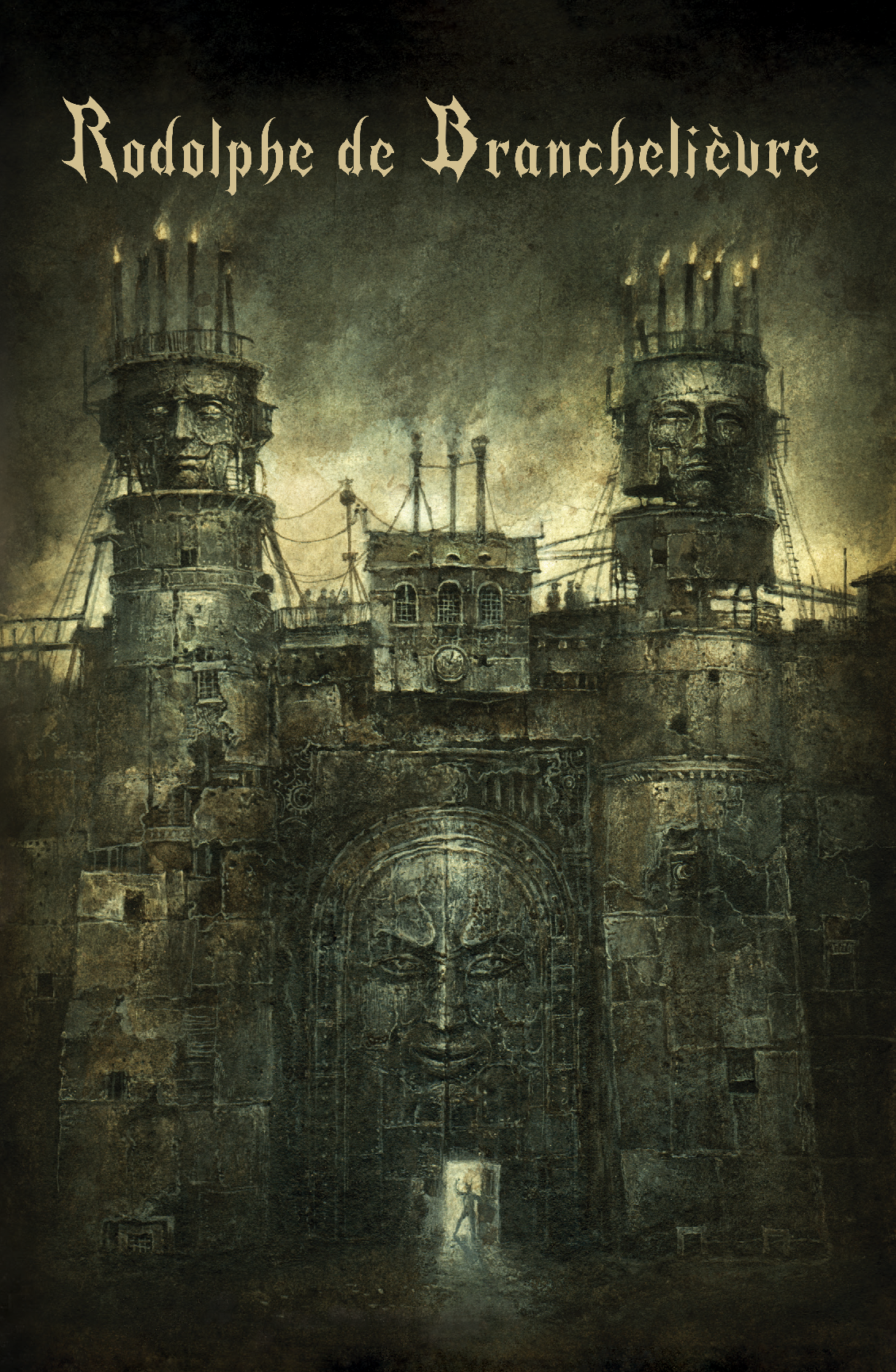
Quel tourbillon d’intrigues sexuelles, d’assassinats, d’empoisonnements, de trahisons, de rituels sataniques et encore... dans une œuvre louisianaise qui aurait pu porter le titre Les Mystères de la Nouvelle-Orléans ou bien, Les Chants du Maldoror créole ! Ce livre délirant défie la compréhension facile et tout lecteur qui ose pénétrer dans ce monde infernal risque de s’égarer dans la fange de la ville du Croissant.
L’introduction de Ryan Atticus Doherty fait preuve d’une érudition qui révèle l’importance de ce roman marécageux, sombre et plein de poison dans lequel naît le fantastique dans la littérature urbaine et sophistiquée néo-orléanaise. Comme note Doherty, Lemaître se sert d’un français qui se veut mondain et académique, mais où affleurent ici et là des mots et des murmures du vernaculaire propre à la Ville des années 1850. Lemaître est un des premiers de nos écrivains à le faire ; Doherty le premier à le reconnaître.